
BECHTOLD
March 11 to May 24, 2020
MKM Museum Küppersmühle for Modern Art, Duisburg
Virtual tour with MKM Director
Walter Smerling
Not so much time? Here is the tour in compact form:
You are currently viewing a placeholder content from YouTube. To access the actual content, click the button below. Please note that doing so will share data with third-party providers.
More InformationYou are currently viewing a placeholder content from YouTube. To access the actual content, click the button below. Please note that doing so will share data with third-party providers.
More Information
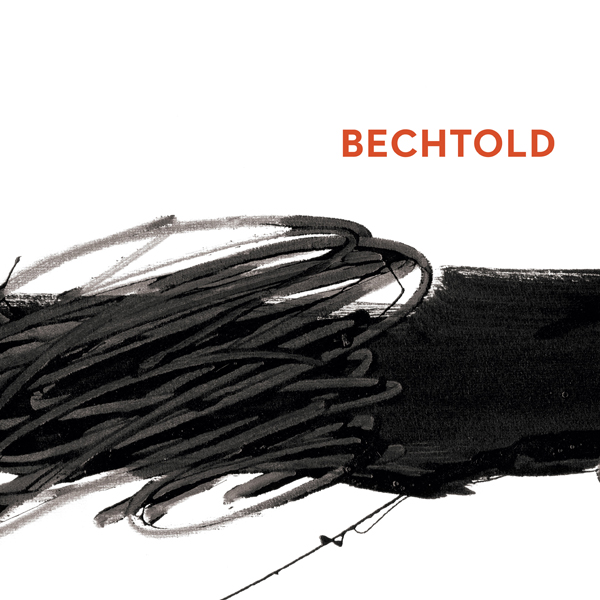
Painting as a search for freedom, as an antithesis to ideology and as an expression of independence: this basic artistic understanding underlies the works of Erwin Bechtold (*1925 in Cologne). As a radical consequence, he decided against inheriting the family business and for a life as a freelance artist and graphic designer and emigrated to Spain in the 1950s. Bechtold began his artistic career in the environment of Franco oppositional artistic circles, where nocturnal secret meetings were nothing unusual. Today he is one of the most important representatives of abstract post-war art in Germany and Spain.
The contrast between glistening southern light and deep shadow has also been incorporated into Bechtold’s pictures, as has the cubic architecture on Ibiza with its tension between geometry and craftsmanship. Picture titles such as Discordia describe the system in which Bechtold operates: orders are there to be disrupted: “Not unlike an architect, I build my pictures. People are at the center of my work – and like nature, they live in contrasts, tensions and disturbances. We are existentially involved in the game of orderly disorder and disorderly order. My paintings are an attempt to translate this complex inscrutability into artistic reality.”
The exhibition presentation does not follow a chronology, but is based on the artistic statement, starting from early informal to geometric paintings and works on paper, which are linked by the principle of disruption. The more recent works combine gestural-drawing and constructive-geometric elements and bring together the tension between painting “from the gut” (the gestural) and “intellectual” painting (the geometric).